Human Performance
Exam Information
- Human Factors Basic Concepts: 4 Questions
- Basics of Flight Physiology: 24 Questions
- Basics of Aviation Psychology: 20 Questions
- Total: 48 Questions | Duration: 1hr 30 mins
- Instructor: Ian Young
Gas Laws
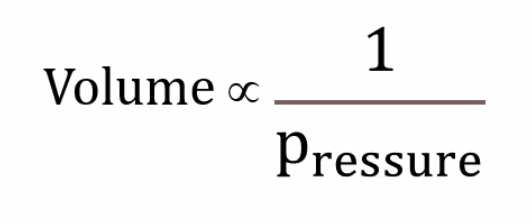
Boyle’s Law
==The pressure exerted by a gas is inversely proportional to the volume it occupies.==
Henry’s Law
==Gas concentration in a liquid is proportional to the partial pressure of the gas in contact with the liquid.==
Example: Opening a bottle of coke - the higher pressure in the unopened bottle will try to equalise when the bottle is opened.
Dalton’s Law
==The pressure of a mix of gases is the sum of the partial pressures of those gases.==
Decompression Sickness
Neurological Symptoms:
- Vertigo
- Headaches
- Partial loss of vision
Risk Factors:
- Age
- Obesity
- Scuba diving
Q. Symptoms of decompression sickness: A. Bends, chokes, creeps and neurological symptoms
Hyperventilation
Definition: Increased lung ventilation (respiratory alkalosis)
Altitude and Oxygen Requirements
| Altitude Range | Oxygen Requirement |
|---|---|
| 10,000 - 33,700 ft | Oxygen Mix |
| 33,700 - 40,000 ft | 100% Oxygen |
| Above 40,000 ft | Pressure Breathing |
Causes
- Anxiety
- Motion sickness
- Vibration
- High acceleration
- Extreme environmental pressures
- Pressure breathing
Symptoms
- Dizziness
- Tingling in the extremities
- Visual disturbances
- Hot and cold flushes
- Anxiety
- Impaired performance
- Loss of consciousness
Countermeasures
- Breathing slowly
- Closing one nostril and speaking loudly
- Paper bag over nose and mouth
Q. What events can cause hyperventilation (not required by physical need)? A. Pressure breathing, anxiety or fear, overstress, strong pain
Oxygen Transfer and Hypoxia
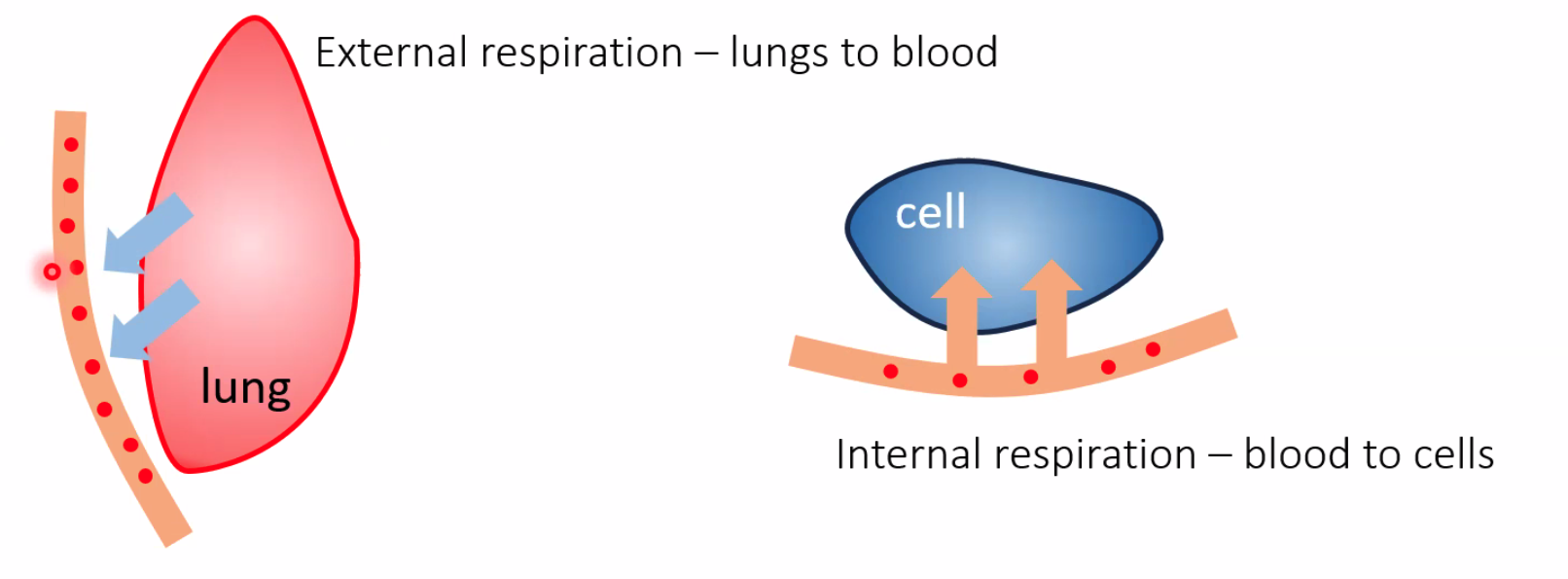
Q. The transfer of oxygen from the alveoli to the blood can be described by: A. The law of diffusion
Hypoxia Susceptibility Factors
Increased Susceptibility:
- Cold / Heat
- Alcohol consumption
- Fatigue
- Overweight
- Illness/nausea
- Smoking
- Exercise/exertion
- Anaemia
Hypoxia Thresholds
Reaction Threshold ==(7,000 ft)==
- ==Night vision already affected at 5,000 ft==
- Definite reaction from body to lower O₂ saturation levels (rods more sensitive to oxygen drop)
- Performance of complex tasks impaired
- Slight increase in both breathing and heart rate
Disturbance Threshold ==(10,000-12,000 ft)==
Significantly lower saturation - defence mechanisms generate cardiovascular/respiratory responses
Body struggling to cope:
- Impaired judgement
- Reduced memory and alertness
- ==Short term memory impaired above 12,000 ft==
- Drowsiness becomes a problem
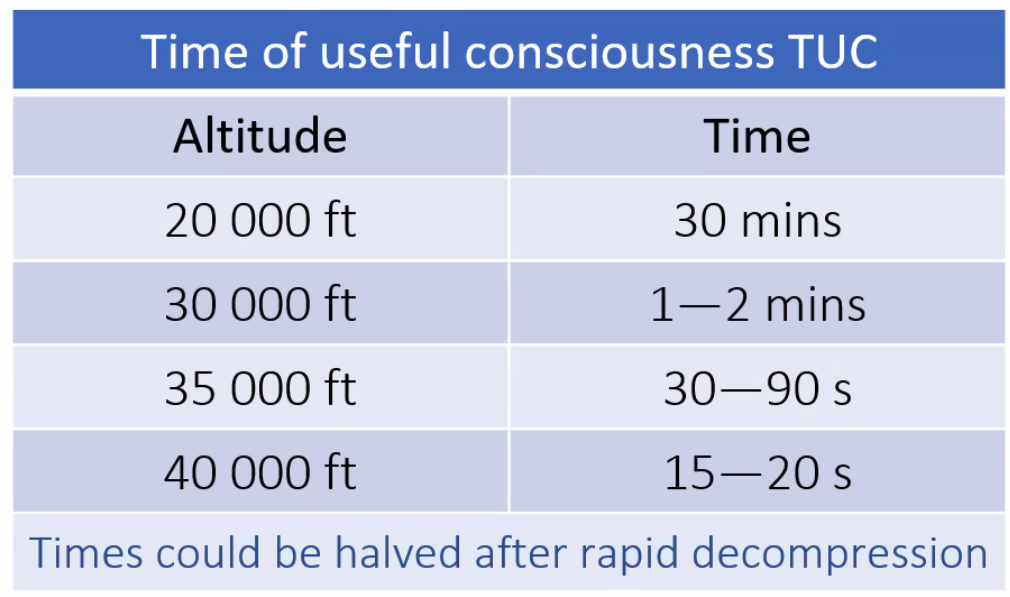
Critical Threshold ==(18,000-22,000 ft)== Exam: ==20,000 ft==
- ==Saturation fallen as low as 60-65%==
- Mental performance quickly deteriorates
Q. Hypoxia can affect night vision: A. ==At approximately 5,000 ft==
Night vision can be affected from 5,000 ft because it depends more on the rods.
G-Forces and Acceleration
Q. What is the main problem caused by positive (+G) accelerations? A. A pooling of blood in the lower portions of the body, and hence less blood available
+G Effects (Head-to-Feet)
- ==3G: Grey out==
- ==3.5G: Tunnel vision==
- ==6G: Blackout==
- ==7-8G: Unconsciousness==
Rods in the eye are quite susceptible to reduced blood flow (in a +G acceleration), hence why grey out is the first symptom. Blackout occurs when the light-sensitive parts of the eye no longer work because there is no oxygen reaching those parts.
-G Effects (Feet-to-Head)
- ==Approaching -3G: Red out==
- Increase in blood pressure in head: pain, bursting of blood vessels
Vision
Flash Blindness Protection
Q. When flying through a thunderstorm with lightning you can protect yourself from flash blindness by: A. Turning up the intensity of cockpit lights, looking inside the cockpit, wearing sunglasses, using blinds or curtains when installed
Sunglasses Guidelines:
- ❌ No polarised
- ❌ No photo-chromatic
- ❌ No yellow tinted glasses
- ❌ No sunglasses over prescription glasses
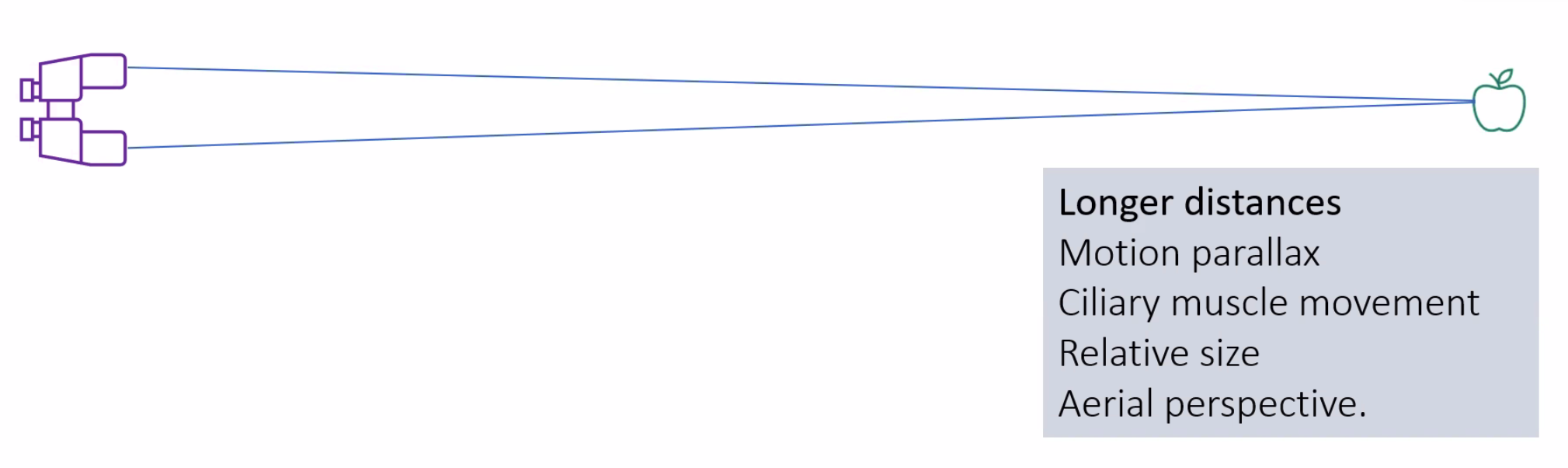
Depth Perception
Q. Visual perception of depth at close to medium distance is primarily due to: A. Binocular vision
Visual Conditions
Presbyopia
- ==Occurs over age 50 (exam reference)==
- Lens hardens and stiffens - harder to alter shape
- Myopia: Short-sightedness
- Hyperopia: Far-sightedness
Glaucoma
- Blocked aqueous humor drain holes
- High intraocular pressure within both eyes
- Can lead to total blindness
- Undetected reduction in visual field and reduced acuity
Q. During a medical, a pilot is assessed to have lost vision in one eye. This is __ vision and the pilot is assessed as __ fit to fly. A. Monocular / Maybe
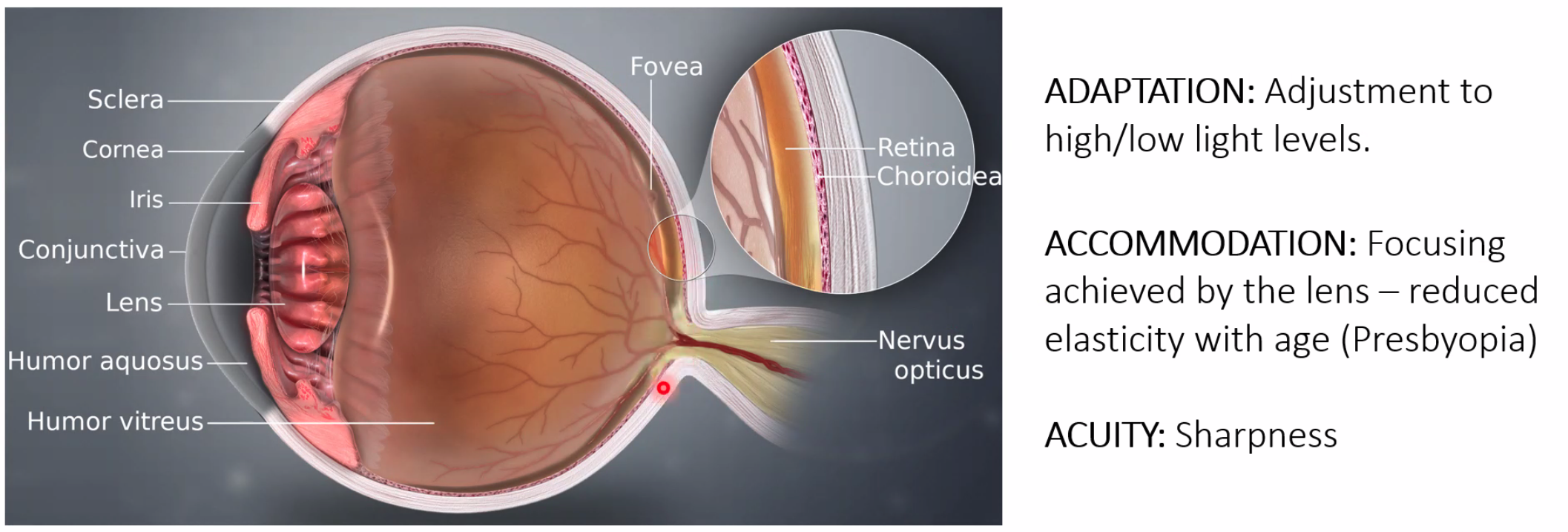
Adaptation
Q. Adaptation is: A. The adjustment of the eyes to high or low levels of illumination
Sensory Illusions
Types of Illusions
Definition: A false impression when sensory information is misinterpreted by the brain.
Somatogravic Illusions
Linear acceleration makes you think you are climbing or descending.
Somatogyral Illusions (The Leans)
Entering a slow, balanced turn may not be sensed. Sustained acceleration no longer recognised.
Autokinesis
Staring at an object or light long enough in the dark can make it appear to be moving.
Empty Field Myopia
Lack of things to look at causes eyes to relax focus to a couple of metres in front.
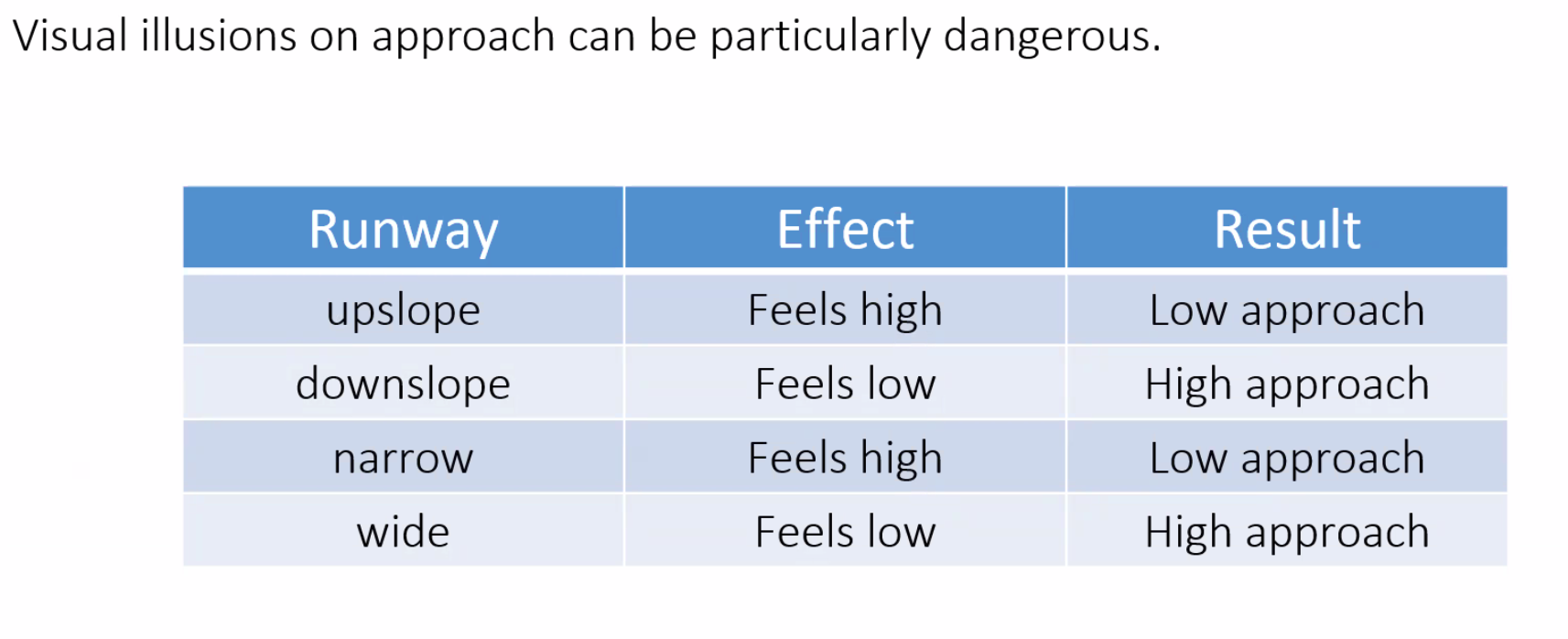
Black Hole Effect
Runway can appear FURTHER AWAY resulting in a low approach (made worse by rain on windscreen).
Vestibular System
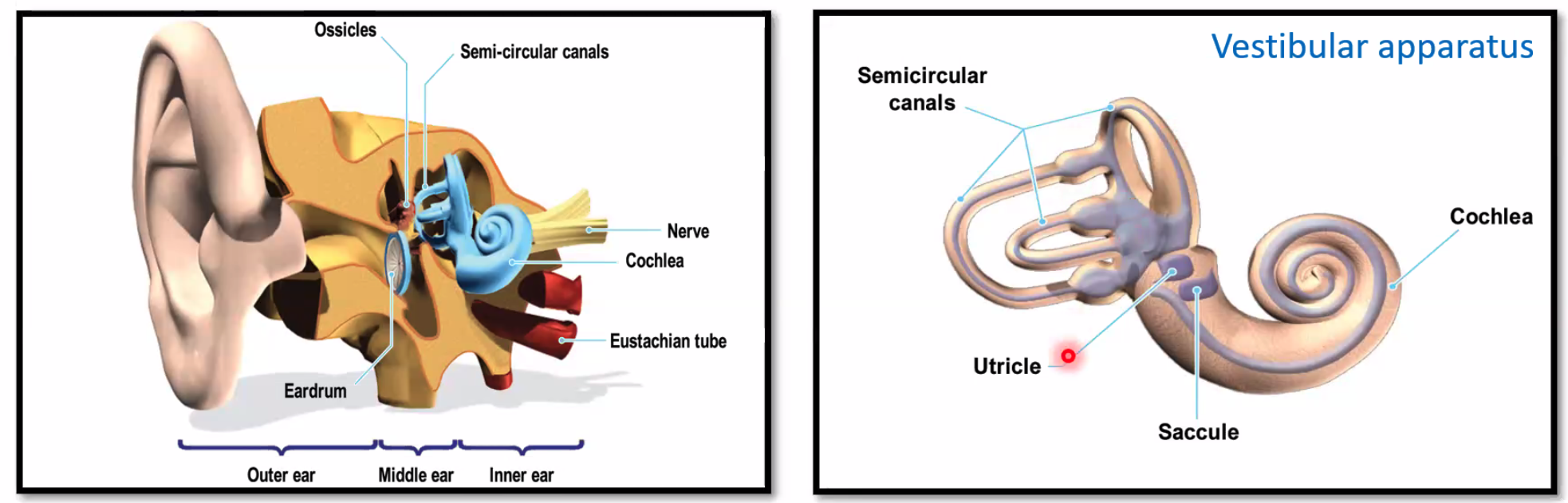
Q. Which part of the vestibular apparatus is affected by changes in gravity and linear acceleration? A. ==The sacculus and utriculus==
Vestibular Components:
- Semi-circular canals: Angular acceleration
- Cochlea: Hearing
- ==Sacculus and utriculus: Otoliths (gravity and linear acceleration)==
Motion Sickness
Q. Which of the following systems are involved in motion sickness? A. The vestibular system, vision, the proprioceptive senses (seat of pants sense), the gastrointestinal system
Cause: A sensory conflict within the vestibular system and vision resulting in nausea and vomiting.
Contributing Factors:
- Anxiety
- Hyperventilation
Countermeasure: Fix your gaze on a stable distant object.
Hearing
Q. What is meant by Presbycusis? A. Gradual loss of hearing with age
Presbycusis: Responsiveness of eardrum decreases with age, losing the high tones first.
Presbymyopia: Loss of flexibility of the lens (eye).
Respiratory System
Q. Which statements about the lungs listed below are true: A. Total gas volume of the lungs is NOT usable, the average lung volume is 5-6 litres, the process of gas exchange in the lungs is carried out by passive diffusion
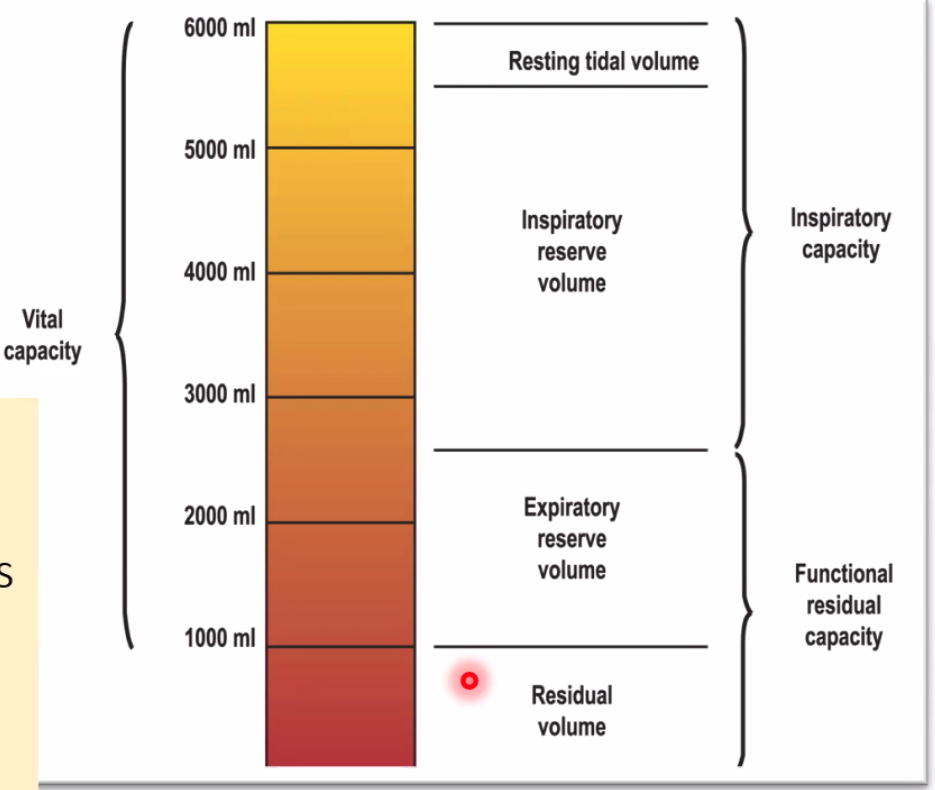
Lung Volumes
- ==Total lung capacity: 5-6 litres==
- ==Resting tidal volume: 0.5 litres==
- ==Vital capacity: 5 litres==
- ==Residual volume: 1 litre==
Sensory Perception
Q. Stimuli must be of a certain strength for the receptors to pick them up. This is called sensory: A. Threshold
Key Concepts:
- The first stage in the information process is sensory stimulation
- Exceeding stimulus threshold doesn’t guarantee perception
- Sensors can get used to stimulus and disregard it - ==habituation==
- ==Just Noticeable Difference (JND): The minimum difference in stimulus intensity needed to detect a change==
High-Altitude Flight Hazards
Q. The ozone layer is situated in the: A. Stratosphere
Ozone Characteristics:
- ==Most concentrated in top half of stratosphere (40,000 to 75,000 ft)==
- Toxic and can destroy lung tissue
- Ozone filter may be fitted
Ozone Intensification Factors:
- Altitude
- Latitude
- Normal solar activity
- Random solar activity
Other High-Altitude Hazards:
- Low humidity
- Oxygen depletion
- Solar radiation
- Fatigue
Aviation Psychology
Motivation
Q. Motivation is an important attribute that contributes to flight safety. Which of the following is correct regarding motivation? A. Excessive motivation leads to stress, which adversely affects performance.
Memory
Q. Which of the following is the best definition of episodic memory? A. It is the memory of events which are held in the long term and are triggered by suggestion
Three Types of Memory
-
Sensory Store
- Preserves continuity of experience from one moment to the next
-
Working/Short-Term Memory
- ==Duration: 15-30 seconds==
- ==Capacity: 7 bits of information==
- Can be improved by a process called ==chunking==
- Can be affected by interruptions
-
Long-Term Memory
- ==Semantic: Facts, words, language==
- ==Episodic: Events, influenced by suggestion==
- ==Procedural: Responsible for knowing how to do things (motor skills)==
Semantic memory lasts longer and is more reliable than episodic memory.
Retrograde Amnesia
Loss of old memories; strongest effects usually on episodic memory.